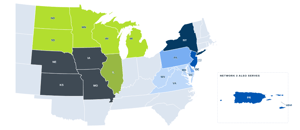
An ESRD Network is defined in the Code of Federal Regulations (CFR), at 42 CFR Part 405, Subpart U as all Medicare-approved ESRD facilities within a designated geographic area specified by CMS. These regulations require ESRD treatment facilities to be organized into Networks to promote effective coordination of care. Through this organized structure, dialysis and transplant providers can coordinate patient referrals and resource allocation more efficiently.
What is the ESRD Network Program?
On June 13, 1978, Congress enacted modifications to the Medicare ESRD Program (PL 95-292) to improve cost-effectiveness, ensure quality of care, encourage kidney transplantation and home dialysis, and assist patients in returning to work. This legislation amended Title XVIII of the Social Security Act by adding Section 1881, which designated ESRD Network areas and established statutory requirements for the Network Organization Program, consistent with criteria determined by the Secretary of the Department of Health and Human Services.
ESRD Network Organizations serve as the administrative governing body for each Network and act as liaisons to the Federal government. To achieve coordinated delivery of ESRD services, representatives from hospitals and health facilities serving dialysis and transplant patients are connected with patients, physicians, nurses, social workers, dietitians, and technicians through Network Councils. Currently, 18 Network Organizations operate across the United States and its territories.
Why does CMS have an ESRD Network Program?
CMS relies on Network Organizations to develop relationships with dialysis professionals, providers, and patients while creating a collaborative environment to improve patient care. A primary function of Network Organizations is to assist CMS in understanding the needs of ESRD patients by including them in quality improvement activities and meetings with CMS. CMS directs Network Organizations through contractual agreements and conducts annual evaluations of quality improvement activities and organizational goals.
Title XVIII Section 1881 of the Social Security Act requires each Network Organization to be responsible for:
- Encouraging, consistent with sound medical practice, the use of treatment settings most compatible with successful patient rehabilitation and promoting patient, provider, and facility participation in vocational rehabilitation programs
- Developing criteria and standards relating to quality and appropriateness of patient care, and establishing Network goals regarding patient placement in self-care settings and transplantation preparation
- Evaluating procedures by which facilities and providers assess the appropriateness of patients for proposed treatment modalities
- Implementing procedures for evaluating and resolving patient grievances
- Conducting on-site reviews of facilities and providers as necessary, utilizing established standards of care to ensure proper medical care
- Collecting, validating, and analyzing data necessary for reporting and maintaining the patient registry
- Identifying facilities and providers not cooperating toward meeting Network goals and assisting them in developing appropriate corrective action plans